Too Good To Go Blog
Retail Foot Traffic Tools: Traditional vs. Modern Tracking Methods
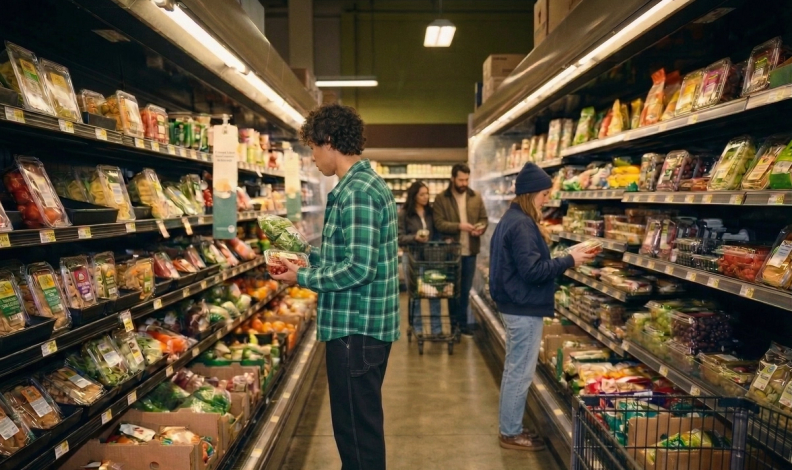
Physical foot traffic is one of the most valuable data points a food retailer can have, yet many stores are either not tracking it at all or relying on methods that were considered advanced a decade ago.
Today, the global in-store analytics market is valued at $4.17 billion and projected to reach $16.51 billion by 2030 at a 21.8% CAGR (Compound Annual Growth Rate), according to Grand View Research. Shopper traffic analysis alone accounts for about 28% of that revenue.
Retailers investing in foot traffic analytics are not just counting customers at the door; they are building a clearer understanding of how people move through their stores, when demand actually happens, and where opportunities are being missed. Foot traffic insights help store owners and managers optimize staffing, better match production to demand, reduce perishable waste, and drive measurable revenue gains.
For food retailers specifically, the stakes are higher. Margins are tight, inventory is perishable, and the difference between peak and off-peak hours can be significant. Knowing when customers arrive, how long they stay, and how they move through the store helps turn daily uncertainty into more confident, consistent decisions.
This guide breaks down the main foot traffic tracking methods available today, what each one delivers, and where modern approaches are starting to replace traditional tools.
Why Foot Traffic Data Matters for Food Retailers
Food retail is one of the most data-driven environments in the industry, and that trend continues to grow. According to a 2025 joint report from FMI and NielsenIQ, 92% of food retailers now use technology, including AI, to personalize shopping and marketing. The industry spent more than $10 billion on technology in 2023 alone.
The return on that investment is clear. Retailers using geo-location technology achieve 104% greater profit growth, and early adopters see profitability 99% higher than their peers, according to an IHL Group study cited by Chain Store Age.
Foot traffic data plays a direct role in several everyday decisions that shape both performance and waste:
- Staffing: aligning labor hours with real customer demand instead of relying on past assumptions
- Inventory and production: preparing the right amount of food for each daypart
- Store layout: understanding which areas attract attention and drive engagement
- Perishable waste reduction: identifying slower periods where surplus is more likely to build
When these decisions are guided by real behavior instead of guesswork, retailers can operate more efficiently while wasting less food.
Traditional Foot Traffic Tracking Methods
Traditional methods are still widely used, especially among independent retailers and smaller chains. These methods are often chosen because they are simple to implement and require minimal upfront investment. Over time, however, their limitations can make it harder to rely on the data they provide.
Manual Counting
Manual counting involves a staff member using a handheld clicker to track each person entering the store. It is one of the simplest methods to implement and requires little to no upfront investment, which is why some smaller retailers still rely on it.
However, the method depends entirely on consistent human attention, which can be difficult to maintain throughout the day, especially during busy periods. Accuracy can drop when multiple people enter at once or when staff are balancing other responsibilities. It also requires dedicated staff time, which may not always be practical in fast-paced food retail environments where teams are already managing customers, inventory, and operations.
Beyond basic counts, manual tracking does not provide visibility into what happens inside the store. It cannot show how long customers stay, where they go, or how traffic changes throughout the day.
For retailers looking to make more informed decisions, these limitations can make manual counting harder to rely on over time.
Infrared Beam Sensors
Infrared sensors work by projecting a beam across a doorway and counting each time it is interrupted. They are relatively simple to install and are often used as a step up from manual counting. In practice, however, accuracy can vary depending on the store layout and how customers enter. When multiple people walk through the entrance at the same time, they may be counted as a single visit, which can lead to undercounting. Basic systems can also struggle to distinguish between people entering and exiting, making it harder to understand true visitor numbers.
While infrared sensors provide a more automated approach than manual counting, they still offer limited insight beyond how many people crossed the threshold.
Turnstiles and Mechanical Door Counters
Turnstiles count entries with a high level of accuracy because each movement corresponds to one person passing through. They remain common in supermarkets for managing entry and exit flow.
However, they introduce a physical barrier that can slow down the customer experience and are not practical for many food retail formats, such as cafés or smaller stores. They also only provide basic entry counts, without any visibility into what happens once customers are inside.
Limitations Across All Traditional Methods
The shared limitation of traditional tools is that they stop at the door. They can tell you how many people entered, but not what happened next. They do not show where customers went, how long they stayed, whether they made a purchase, or when traffic slows during quieter periods.
For food retailers managing perishable inventory across multiple times of day, that missing context can make it harder to adjust in real time and reduce unnecessary waste.
Modern Foot Traffic Tracking Methods
Digital and AI-powered methods deliver significantly higher accuracy and far richer insight into customer behavior than traditional sensors can provide. The right method depends on store size, budget, privacy considerations, and what decisions the data needs to support.
AI-Powered Video Analytics
3D stereo vision cameras with advanced analytics are now widely used for in-store counting and analysis. These systems can achieve high levels of accuracy while also offering additional capabilities such as distinguishing between staff and customers.
Beyond counting, they provide deeper insight into what happens inside the store. This includes generating heatmaps, measuring dwell time, tracking shopper paths, and monitoring queue lengths.
However, like any tracking method, they are not without limitations. Accuracy can still be affected in very crowded environments, especially when people overlap or move closely together. Performance can also depend on factors like camera placement, store layout, and lighting conditions.
Hardware typically requires a higher upfront investment, along with ongoing software subscriptions. Because cameras capture visual data, privacy is an important consideration, and many systems now process and anonymize data before it leaves the store.
Mobile Location Data and GPS Analytics
Mobile location data uses anonymized signals from opted-in devices to analyze visitation patterns, trade areas, cross-shopping behavior, and consumer trends, without requiring in-store hardware.
This approach is useful for understanding broader patterns, such as where customers are coming from or how often they visit. It can support decisions around store locations and overall performance.
However, it is less precise when it comes to in-store behavior. GPS signals are generally less accurate indoors, which means this method cannot reliably show how customers move within a store or how long they spend in specific areas.
For that reason, it is often used alongside other tools rather than as a standalone solution.
Time-of-Flight Sensors
Time-of-flight sensors use light signals to measure movement and create a depth-based view of foot traffic. Because they do not capture identifiable images, they are often considered a privacy-conscious option.
They can provide more consistent counting than some traditional methods, particularly in environments where lighting conditions may vary.
However, like other sensor-based systems, accuracy can still be affected in crowded environments where people overlap or move closely together. They are also primarily focused on counting entries and exits rather than providing deeper insight into customer behavior.
For retailers looking for more detailed visibility, they are often combined with other tools.
Geofencing and Bluetooth Beacons
Geofencing and Bluetooth beacons are often used to add a layer of location-based insight and engagement. They can help retailers understand when customers enter a defined area or interact with specific parts of a store, while also supporting more personalized experiences, such as highlighting offers based on location.
However, these tools depend on customer participation, such as having an app installed or location services enabled. This means they typically capture only a portion of total foot traffic.
As a result, they are most effective when used alongside a primary tracking method rather than on their own.
Off-Peak Traffic, Perishable Waste, and a Smarter Approach
For food retailers, the off-peak traffic gap is not only a missed revenue opportunity, but it is also a direct driver of waste. 30-40% of the U.S. food supply goes to waste, nearly 30% of which ended up in landfills.
Bakeries, deli counters, and prepared food sections need to produce enough food to maintain full displays during peak hours, but when actual traffic falls short of forecasts during slower periods, that surplus becomes waste. Foot traffic analytics helps make the problem visible and measurable, which is the first step toward addressing it.
Research published in Management Science found that optimizing how near-expiry perishables are displayed and discounted produces an average profit increase of 6.01% and a waste decrease of 21.24% in modeled retail scenarios — suggesting that even small operational changes, informed by better data, can meaningfully move the needle.
This is where Too Good To Go helps food retailers make the most of surplus food. The platform connects stores with customers who purchase surplus food at a discount through Surprise Bags, collected during store-set pickup windows. For retailers looking to recover value from unsold food during slower periods, this approach helps turn surplus into additional revenue while reducing waste.
Choosing the Right Approach for Your Store
The right foot traffic tool depends on store size, budget, and what questions need to be answered.
Smaller retailers may prioritize simple, lower-cost solutions that provide basic visibility into daily traffic. Larger operators may need more advanced tools to better understand customer behavior across locations.
In many cases, a combination of methods provides the most complete picture.
What matters most is having enough visibility to understand real customer patterns and make more informed decisions throughout the day. And for food retailers, one of the most important patterns to understand is when demand drops off.
Those slower periods are where surplus builds, and where the opportunity to recover value is often missed. That’s where Too Good To Go comes in, helping retailers turn unsold food into additional revenue while reducing waste.
Frequently Asked Questions
What is foot traffic analytics in retail?
Foot traffic analytics is the process of tracking how many people visit a store and how they move within it. Retailers use this data to understand customer behavior, identify busy and slow periods, and make better decisions around staffing, inventory, and store layout.
What is the difference between traditional and modern foot traffic tracking?
Traditional methods focus on counting how many people enter a store, often using tools like manual clickers or sensors at the door. Modern methods go further by helping retailers understand what happens inside the store, including how customers move, where they spend time, and how traffic changes throughout the day.
Which foot traffic tracking method is most accurate?
Accuracy depends on the method and how it is set up. Camera-based systems and advanced sensors can provide more consistent results, especially in busy environments. However, no method is perfect, and factors like store layout, crowding, and placement can all affect performance.
How can foot traffic data help reduce food waste?
Foot traffic data helps retailers understand when demand is highest and when it drops off. By identifying slower periods, stores can adjust production, reduce over-preparation, and plan how to manage surplus more effectively.
What are off-peak hours in food retail?
Off-peak hours are the times of day when customer traffic is lowest. For many food retailers, this often happens in mid-afternoon or later in the evening. These periods are important because they are when unsold food is most likely to become surplus.
How can retailers increase revenue from surplus food?
Retailers can recover value from surplus food by selling it at a reduced price instead of letting it go to waste. Platforms like Too Good To Go make this possible by connecting stores with local customers who are willing to purchase surplus food during slower periods.
start saving food today
Our app is the world's largest marketplace for surplus food. We help users rescue good food from going to waste, offering great value for money at local stores, cafes and restaurants.
Too good to go blog

Too Good To Go BlogFood Freshness Explained: What It Means for Different Types of Food
July 16, 2026
Food freshness affects countless decisions across the supply chain. It influences what customers buy, how businesses manage inventory, and which products ult...
Too Good To Go BlogRestaurant Demand Forecasting 101: A Practical Guide for Independent Operators
July 14, 2026
A multi-unit franchise may have predictive analytics to help with restaurant demand forecasting. An independent operator, on the other hand, is often relying...
Too Good To Go BlogHow Food Waste Is Quietly Driving Up Your Grocery Bill
July 9, 2026
Few things are more frustrating than watching your grocery bill continue to climb while your cart seems to shrink. Inflation often gets the blame, but it’s o...
Too Good To Go BlogBeyond the Checkout: Untapped Revenue Opportunities for Grocery Retailers
July 7, 2026
Profitability feels increasingly difficult to protect lately. Operating costs continue to rise, shoppers remain price-sensitive, and competition extends far...