Too Good To Go Blog
The Impact of Cause Marketing in Food Retail
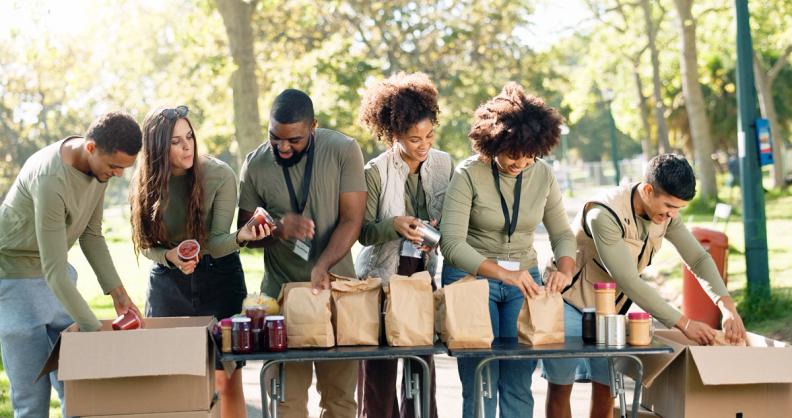
Cause marketing started in an unexpected place: food retail, in a 7-Eleven to be exact. Back in 1974, the convenience store partnered with the National Wildlife Federation to bring conservation into everyday transactions. Backed by a $200,000 advance from 7-Eleven, the campaign contributed 1¢ from every Slurpee sold and featured Endangered Species Cups designed by wildlife artist Charles Ripper. Together, it funded 835 acres of bald eagle habitat in South Dakota.
Even then, a simple purchase carried a larger purpose, giving customers a reason to feel good about where they spent their money. Today, that same idea still shapes how people choose where to shop. Cause marketing has evolved from one-off campaigns into a powerful influence on purchasing decisions and trust. Understanding what it looks like in modern food retail, along with how it shows up across different in-store initiatives, reveals just how much impact it can have.
What is Cause Marketing?
Cause marketing is a strategy where businesses align their sales with a social or environmental cause, aiming to drive revenue while making a measurable impact. In food retail, this often shows up in ways that connect personal purchases to real-world impact to reinforce the role brands play in their local communities. Across formats, cause marketing creates a link between what customers buy and what they support, giving purchases added meaning beyond the transaction.
8 Types of Cause Marketing in Food Retail
From quick-service counters to neighborhood bakeries and local grocers, cause marketing shows up in ways that fit how each business serves its customers. Some approaches tie directly to purchases, while others focus on awareness or community involvement. Here are the most common cause marketing types you’ll see throughout food retail, along with how brands put them into action:
- Action-Based Giving. A customer action, like a purchase or social engagement, triggers a set donation. A smoothie shop might give a fixed amount for every shared campaign post.
- Brand-Funded Contributions. A company donates directly to a cause without requiring customer participation. A regional grocer might fund local food banks as part of an ongoing initiative.
- Percentage-of-Sales Giving. A portion of each sale is directed to a nonprofit or cause. A bakery could donate a percentage of cookie sales to a community organization.
- Checkout Donations. Customers are invited to contribute at checkout, either in-store or online. A convenience store may ask shoppers to round up their total to support climate-focused programs.
- Buy One, Give One. Each purchase triggers a matched donation of a product to someone in need. A café might donate a meal to a local women’s shelter for every sandwich sold.
- In-Store Recognition. Customers who make an in-store donation are acknowledged with a poster or paper icon inside the location. A pizza shop may feature donor names on a wall display.
- Volunteer Initiatives. Brands encourage customers to donate their time instead of money. A full-service restaurant could organize a community cleanup or volunteer day.
- Awareness Campaigns. Marketing channels are used to promote a cause or inspire action. A health food store might highlight food waste reduction through in-store signage.
How Does Cause Marketing Influence Purchasing Decisions?
Cause marketing plays a growing role in how consumers choose where to shop and how they perceive food retail brands. Modern shoppers expect more than products alone, with 71% of Americans saying companies have a greater responsibility to address social issues. Another 61% want the brands they support to help them do good, positioning cause marketing as a way for retailers to meet these expectations.
Shared Values Are Shaping Where People Shop
Cause marketing reflects a growing shift in how consumers evaluate brands, with 72% saying they look for companies that share their values. That expectation is even stronger among younger shoppers, as 42% of Millennials and 70% of Generation Z actively seek socially responsible businesses. In turn, 45% of consumers say they are more likely to buy from brands that give a portion of sales to a charitable cause.
Purpose Builds Trust (and Trust Drives Purchases)
Shared values often draw customers in, but purpose is what keeps them coming back. Cause marketing gives those values a visible role in how brands operate, turning campaigns into something shoppers can recognize and respond to. When faced with similar options, 71% of consumers choose purpose-driven brands, and nearly 80% are more likely to remember them.
A clear sense of purpose also strengthens consumer trust. Brands with a strong purpose are 4.1 times more likely to be trusted, and 88% of consumers say trust matters just as much as price and quality when deciding what to buy. Trust is even more critical for retailers branching into new markets, with 26% of shoppers prioritizing reputation and trust when trying a brand for the first time.
Sustainability is Transforming Intention Into Action
As trust builds, it begins to shape how consumers act, especially when it comes to sustainability. Cause marketing connects eco-conscious priorities to everyday choices, with 85% of consumers reporting firsthand impacts of climate change and 46% actively buying more sustainable products to combat them. Many shoppers are adjusting their food retail habits in measurable ways:
- 43% are making more considered purchases to reduce overall consumption
- 32% are changing what they eat
- 31% are traveling less or differently
For food retailers, these changes influence how customers feel about your brand and, ultimately, where their dollars go. Cause marketing helps spotlight social or environmental efforts, giving consumers a clearer reason to choose one option over another. The best part? Everyone wins: the business earns the sale, and customers walk away knowing their purchase had a real impact.
Popular Examples of Cause Marketing in Food Retail
Cause marketing comes to life in the ways food retailers bring charitable initiatives into everyday customer interactions. From in-store programs to nationwide partnerships, brands are finding creative ways to connect purchases with purpose. The examples below show how cause marketing can influence perception, drive engagement, and shape where consumers choose to spend.
Box Tops for Education
Box Tops for Education is a long-running example of cause marketing in grocery retail, turning household purchases into meaningful support for local schools. Sponsored by General Mills, the program has raised nearly $1 billion since 1996 by linking select products to school funding. What began as a simple clip-and-collect system has evolved into a digital experience, where shoppers scan receipts to automatically apply earnings to a school in need.
Each qualifying purchase contributes 10 cents to a selected school, making it easy for families to support education as they shop. For participating brands, it offers a way to stand out on crowded shelves while reinforcing a shared community focus. For schools, those small contributions add up quickly, creating a steady stream of funding driven by routine grocery decisions.
Feeding America's Retail Partner Program
Feeding America has built one of the most recognizable cause marketing programs in food retail by partnering with grocers, convenience stores, and consumer brands across the United States. Participating retailers run campaigns ranging from holiday round-ups and reusable bag programs to on-pack donations tied to specific products. Each partner shapes the campaign to fit its customers, while the impact rolls up to a single, well-known cause: providing meals to families facing hunger.
The program reflects how cause marketing scales when the cause itself is bigger than any one brand. Major grocers, regional chains, and national consumer brands have all run point-of-sale campaigns or product-linked donations with Feeding America in recent years. For shoppers, it creates a familiar way to give back during routine grocery trips. For retailers, it offers a turnkey way to align with a cause customers already trust.
The Grocery Foundation's Make Happy Tummies
In Canada, The Grocery Foundation has built one of the country's most established cause marketing programs through Make Happy Tummies, which encompasses the long-running Toonies for Tummies campaign and the Breakfast Voucher Program. Customers at participating grocery stores can donate at checkout to help fund school nutrition programs that provide breakfasts and snacks for children across the country. To date, The Grocery Foundation has donated more than $75 million to child welfare-focused charities through its ongoing programs.
The campaign reaches across roughly 1,800 grocery locations during its annual run from January to April, with participation spanning Western Canada, Ontario, Quebec, and Atlantic Canada. Multiple major and independent Canadian grocers contribute, giving the program scale while keeping the impact close to home: dollars raised support breakfast and meal programs in the same communities where they are collected. For grocers, it offers a recognizable, industry-backed way to address child food insecurity year after year.
Surprise Bags: Cause Marketing That Starts with What You Sell
Many cause marketing efforts rely on limited-time campaigns or donations tied to purchases. In food retail, there’s an opportunity to take that further by embedding a cause directly into daily operations. Food waste is one of the most immediate and visible challenges facing the industry, making it a natural focus for retailers looking to align with consumer values in a way that shows up every day.
Platforms like Too Good To Go make that approach more accessible through Surprise Bags, a bundled assortment of surplus food sold at 50–75% of their original retail value. Brands unlock revenue from excess inventory while bringing more customers through the door, and shoppers get quality food at a lower price. Less food goes to waste overall, creating a simple, built-in way to support a larger environmental goal.
The impact extends beyond the transaction, too. Cause marketing becomes part of the experience, encouraging repeat visits and stronger brand perception, with 61% of customers visiting specifically to collect a Surprise Bag and 41% adding additional items during pickup. Every bag saved also avoids 2.7 kg of CO2e emissions, reinforcing the role each purchase plays in reducing food waste.
Rethinking Cause Marketing for Everyday Impact
Cause marketing has evolved from occasional campaigns into a meaningful driver of how consumers choose where to shop and what brands they trust. In food retail, the brands that stand out are the ones that make it part of the everyday experience, not just a seasonal campaign. With Too Good To Go, cause marketing becomes an always-on initiative, helping retailers reduce food waste, attract new customers, and build lasting trust that has a measurable impact on the planet.
FAQs About Cause Marketing in Food Retail
What is cause marketing in food retail?
Cause marketing in food retail refers to campaigns that connect everyday purchases to a social or environmental cause. It allows restaurants, grocers, and cafés to align their business with a larger purpose, impacting how customers perceive their brand and where they choose to spend.
How does cause marketing influence purchasing decisions?
Cause marketing can shape both consumer perception and behavior. Many customers actively seek out brands that reflect their values, and they are more likely to choose businesses that support a cause over similar alternatives, especially when the impact is clear and consistent.
Why is cause marketing important for food retailers today?
Shoppers expect brands to play a role in addressing social and environmental challenges. Cause marketing helps food retailers meet those expectations while building trust, strengthening brand loyalty, and creating a more meaningful connection with customers.
What makes a cause marketing campaign effective?
The most effective cause marketing efforts feel authentic and easy to understand. Campaigns that are clearly tied to the business and show a visible impact tend to resonate more with customers and are more likely to influence repeat visits and long-term trust.
How does Too Good To Go support cause marketing?
Too Good To Go helps food retailers embed cause marketing into their daily operations by reducing food waste through Surprise Bags. Instead of relying on limited-time campaigns, businesses can take consistent action that aligns with customer values while also driving traffic and incremental revenue.
What are Surprise Bags and how do they work?
Surprise Bags are bundles of surplus food sold at a reduced price, typically 50 to 75% off their original value. Customers purchase them directly through the Too Good To Go app and pick them up at a set time chosen by the retailer, helping businesses recover revenue while reducing waste.
start saving food today
Our app is the world's largest marketplace for surplus food. We help users rescue good food from going to waste, offering great value for money at local stores, cafes and restaurants.
Too good to go blog
Too Good To Go BlogPrice Sensitivity in Food Retail: What It Means for Grocers and Restaurants
June 18, 2026
It’s no secret that rising food costs are making consumers think twice lately. Food prices are currently almost 3% higher than they were a year ago. Grocery...
Too Good To Go BlogHow the Food Supply Chain Creates Waste and What Retailers Can Do at the Last Mile
June 16, 2026
Every day, food moves through farms, production facilities, distribution networks, and retailers at an enormous scale. Even so, a staggering amount never get...
Too Good To Go BlogUnderstanding Your Customers' Purchasing Habits to Drive Smarter Sales
June 11, 2026
One customer grabs a coffee and pastry on the way to work. Another swings by a deli for a quick protein-packed lunch. Someone else opens a food app at 2 p.m....

Too Good To Go BlogThe Grocery Store Marketing Playbook: How to Grow Traffic and Win New Shoppers
June 9, 2026
Modern grocery shoppers are no longer following the same predictable routines. Instead, they’re scrolling through local deals to inspire dinner, trying limit...