Too Good To Go Blog
Pantry Organization Tips That Help You Waste Less Food
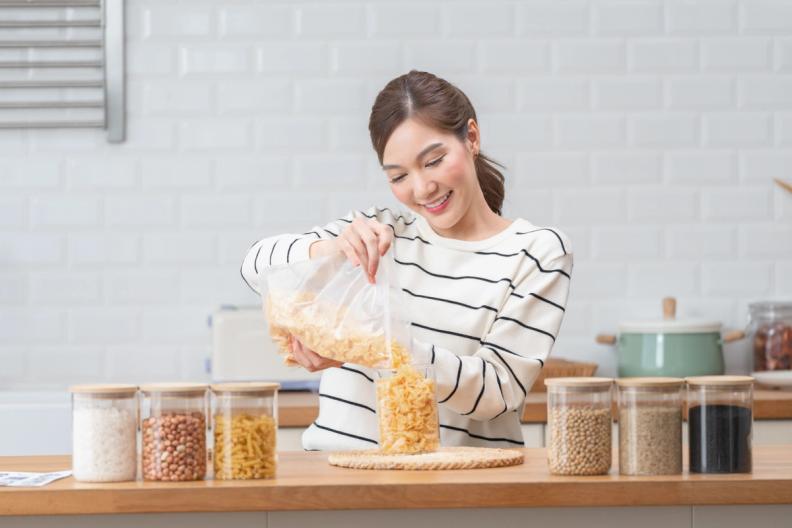
Most of the food that gets wasted at home was bought with good intentions. A bag of lentils slides behind a cereal box, a second jar of peanut butter joins the one you forgot you had, and months later, you find both while looking for something else.
Pantry organization usually gets talked about as a decorating project, with matching containers and a label maker, though the version that saves you money is a lot simpler than that. This guide covers how to see what you own, how to move older food where you will reach for it, and how to store dry goods so they stay good longer. Everything here works in a single apartment cabinet as well as it does in a walk-in pantry, and you can start with one shelf.
Why a Cluttered Pantry Quietly Leads to Wasted Food
The food you throw out is money you already spent. According to ReFED, a nonprofit that tracks food waste across the United States, consumers spend an average of $762 per person each year on food that goes to waste.
ReFED also finds that roughly a third of all the food consumers waste is groceries that never got eaten at home, with the rest coming from plate waste when people eat out. The share sitting in your own kitchen is the part you have the most control over.
Your refrigerator gets opened several times a day, so you notice the spinach going limp eventually, and you have a chance to rescue it. A deep pantry shelf with things stacked two rows back gets a real look maybe twice a year, which is a long time for good food to wait its turn.
The same blind spot is what leads to buying a third box of rice, since you cannot remember from the aisle whether you already have any at home. Both halves of the problem come from the same source, which is that you cannot see what you own. Making everything visible takes care of both at once, so what you buy lines up with what you have and everything on the shelf stays in reach.
How to Take Stock of What You Already Own
Doing the whole pantry in one go turns into an afternoon project most people quit halfway through. One shelf takes about fifteen minutes, and here is how to work through it.
- Empty the shelf completely onto a counter or the kitchen table so you can see every item at once.
- Group what you pulled out by type. This tends to be the moment people discover four half-used bottles of the same vinegar or a small personal collection of pasta shapes.
- Sort into three piles. What you will eat, what is sealed and good but not something your household reaches for, and anything that has gone off.
- Re-home the middle pile. Sealed, unexpired food you know you will not use can go to a local food pantry.
- Write down what goes back. A note on your phone, a whiteboard on the pantry door, or paper taped inside the cabinet all work equally well.
Keep that last list loose, with categories and rough counts rather than a precise running total, because a list you have to maintain perfectly is a list you will abandon by week three. Something like "pasta: 3 boxes, rice: 1 bag, canned tomatoes: 5" tells you everything you need standing in the store.
This turns out to be the habit people reach for first when money gets tight. In a January 2026 survey by ReFED and YouGov, 87% of the consumers who said their grocery spending had gone up reported checking what they already had at home before shopping.
How to Move Older Food to the Front
The habit that does the most work here has a name, first in, first out (FIFO), and it means the oldest food sits where you reach it first while newer food goes behind. Grocery stores run their shelves this way for a reason, and the same logic works at home on a much smaller scale.
The routine takes about thirty seconds when you are unpacking groceries.
- Pull the existing cans and boxes forward before anything new touches the shelf.
- Put the new items behind them, so reaching for whatever is closest means reaching for whatever has been there longest.
- Do it during unpacking, never as a separate task, since nobody goes back to reorganize a shelf later.
Setting up the space to cooperate makes the habit easier to keep. Shallow shelves work better than deep ones because nothing can hide in the back, and if your shelves are deep, pull-out bins or a turntable will bring the rear items within reach. Keeping similar things together helps too, since a designated spot for canned goods means you are only shuffling a handful of items rather than rearranging an entire shelf.
Set aside a small basket at eye level for anything opened or getting close to its date, and look in it before you decide what to cook that week.
How to Store Dry Staples So They Last
Dry goods keep for a long time in the right conditions and a much shorter time in the wrong ones. The USDA's Food Safety and Inspection Service recommends storing shelf-stable food somewhere cool and dry, below 85°F, and warns against keeping it above or beside the stove, under the sink, or in a damp garage or basement.
That same guidance suggests checking your pantry every few weeks and using the canned goods that have been sitting there longest, which is the rotation habit again in a different form.
Moving opened packages into airtight containers does most of the remaining work. Oregon State University Extension recommends glass, metal, or heavy plastic containers with tight-fitting lids and advises against storing dry goods in paper or plastic bags or cardboard boxes, since pantry insects can get through all three.
Use the table below for the staples that come with their own quirks.
Staple | Where It Does Best | What Shortens Its Life |
|---|---|---|
All-purpose flour | Airtight container, cool dark shelf | Humidity, warm cabinets, open bags |
Whole grain flour, cornmeal | Refrigerator or freezer once opened | Natural oils turning rancid at room temperature |
Dried beans and lentils | Airtight container, cool dark shelf | Age, since older beans take much longer to cook |
Nuts and seeds | Refrigerator or freezer | Warmth and light going after the oils |
Cooking oils | Dark cabinet away from the stove | Direct light, heat, repeated air exposure |
Ground spices | Sealed jars away from steam and heat | Time, since flavor fades with long storage |
Canned goods | Cool dry shelf, oldest in front | Temperature swings, damaged seams, rust |
Canned goods hold up better than most people assume. FSIS notes that unopened high-acid canned food like tomatoes, grapefruit, and pineapple keeps 12 to 18 months on the shelf, while low-acid canned food like meat, fish, and most vegetables keeps two to five years when the can stays in good condition in a cool, clean, dry place. Any can that is bulging, rusted, leaking, or deeply dented should be thrown out rather than opened.
What "Best By" and "Use By" Dates Really Mean
A lot of pantry food gets thrown out while it is still perfectly good, and the dates printed on the package are the main reason. Misreading date labels causes about 20% of consumer food waste in the US, which is why Too Good To Go launched its Look-Smell-Taste initiative to encourage people to trust their senses on Best Before products.
Manufacturers use a variety of these labels voluntarily to show how long food will taste its best, and only the Use By date on infant formula is about safety. Everything else is quality guidance or inventory information for the store. Here is what the common phrases mean.
- Best if Used By. The date the manufacturer expects peak flavor and texture. Foods showing no signs of spoilage remain good past this date and can still be sold, bought, donated, and eaten.
- Sell By. A stock rotation instruction meant for the store rather than for you. It says nothing about how long the food is good at home.
- Use By. Also, a quality date on nearly everything, with infant formula as the one federally regulated exception where the date should be followed.
- Closed codes. The strings of letters and numbers stamped on cans are manufacturer tracking codes, not consumer information.
Knowing that changes how much you keep. Rice, pasta, and canned goods are generally fine well past their printed dates when they have been stored properly, though the texture and taste may shift gradually over a long enough stretch.
Your nose and eyes are better judges than the date for most shelf-stable food. Look, smell, and taste before you waste, checking for color changes, visible mold, or a sharp rancid odor in anything oily. Canned goods and dry staples in particular tend to outlast their printed dates by a wide margin when they have been stored somewhere cool and dry.
Shopping Habits That Keep Your Pantry Manageable
An organized pantry stays that way only when what comes in roughly matches what goes out. Four habits do most of the work.
- Read your list before every trip, even a quick one, because two minutes of checking prevents most duplicate buying.
- Size your bulk buys honestly. Utah State University Extension suggests buying only the amount of grain products you can use within about two months, which is a useful reality check on the warehouse-sized bag of almond flour.
- Plan around your use-soon basket first, then write the rest of the list around whatever is left.
- Shop more often in smaller amounts where it is convenient, so less food sits waiting to be forgotten.
How to Fill Your Pantry Without Overbuying or Overspending
Everything above works on the food already in your house. The thing worth knowing is that the exact pattern you are correcting on your own shelf happens at a much larger scale before the food ever reaches you.
A bakery finishes the day with pastries it baked that morning. A grocery store has produce approaching its date and prepared meals that were made for a lunch rush that ran smaller than expected. None of that food has gone off. It has simply passed the window where the store can sell it normally, for the same reason your lentils got pushed to the back, which is that supply got ahead of what anyone got around to eating.
That surplus used to have nowhere to go. Now some of it comes to shoppers directly. Too Good To Go is a marketplace built for exactly this, connecting stores that have surplus at the end of the day with people nearby who want it at a lower price. Stores pack whatever is left into a discounted Surprise Bag, you reserve one through the app, and you collect it during a pickup window near closing time. The contents change day to day, which is where the name comes from. More than 35.7 million meals have been rescued this way across the US.
For a pantry you are trying to keep manageable, this fits better than it might sound. A Surprise Bag becomes the flexible part of your week, something you cook around rather than something layered on top of a full grocery haul. You end up filling in around what you already own, which is the same instinct the rest of this guide is asking you to build.
Start With One Shelf This Week
An organized pantry comes down to a handful of things. See what you own by clearing one shelf and writing down what goes back. Pull older items forward every time you unpack groceries, so what you reach for first is what has been there longest. Store dry goods somewhere cool and dark in containers that shut out air. Read date labels as quality estimates rather than safety deadlines, and trust your senses over the number on the box.
None of it asks for matching containers or a lost weekend. The payoff shows up quietly, in the duplicates you stop buying and the food you finish while it is still good.
Clear one shelf this week and see what turns up. Then download the Too Good To Go app and stock the empty spots for a fraction of what a full grocery run costs.
Frequently Asked Questions
What Is the Best Way to Organize a Small Pantry?
Work upward and keep everything one row deep. Tiered risers let back rows sit higher so you can see them, a door-mounted rack holds spices and small jars, and nothing gets stacked behind anything else. A small space works in your favor, since there is nowhere for food to hide.
How Often Should I Reorganize My Pantry?
The USDA suggests checking your pantry every few weeks and using up the items that have been sitting longest. A full reset twice a year is plenty on top of that, as long as you are moving older items forward when you unpack groceries.
Should I Keep Food in Its Original Packaging?
Keep it for anything unopened so you hold onto the date and the cooking directions. Once you open it, move the contents to a container with a tight-fitting lid, since paper bags and cardboard boxes let in both air and pests.
How Do I Keep Pantry Moths and Weevils Out of My Dry Goods?
Airtight glass, metal, or heavy plastic containers stop most of it. Oregon State University Extension also recommends freezing large quantities of whole grains or beans for at least four days after you buy them, which kills any eggs or insects that came home in the bag.
Can I Store Food in the Pantry if My Kitchen Gets Hot?
Heat cuts shelf life, and the USDA recommends keeping shelf-stable food below 85°F and away from the stove, the sink, and damp spaces. Look for the coolest spot you have, and move oils, nuts, and whole grain flours to the refrigerator if the room runs warm most of the year.
Is It Worth Labeling Everything?
Labels earn their keep on anything you have poured out of its original bag, especially flours and grains that look alike in a jar. Masking tape and a marker work as well as anything you would buy for the purpose.
start saving food today
Our app is the world's largest marketplace for surplus food. We help users rescue good food from going to waste, offering great value for money at local stores, cafes and restaurants.
Too good to go blog
Too Good To Go BlogPantry Organization Tips That Help You Waste Less Food
September 21, 2026
Most of the food that gets wasted at home was bought with good intentions. A bag of lentils slides behind a cereal box, a second jar of peanut butter joins t...

Win $250 app credits & more!Surprise Seconds Sweepstakes
September 17, 2026
Surprise Seconds Sweepstakes: Official Rules Details Page OFFICIAL RULES. NO PURCHASE NECESSARY TO ENTER OR WIN. A PURCHASE DOES NOT INCREASE THE CHANCES...
Too Good To Go BlogHow Convenience Store Trends Are Changing C-Store Operations
September 3, 2026
U.S. convenience stores rang up $341.2 billion in in-store sales in 2025, the 23rd straight year of inside-sales growth. That growth is no longer coming from...
Too Good To Go BlogSurprise Seconds with Ziploc® Brand
September 2, 2026
What is surprise seconds? Together with Ziploc® Brand, we want to help make more of the food already in your kitchen – whether carried home from a restauran...