Too Good To Go Blog
Inside the Numbers: What Too Good To Go Partners Are Recovering
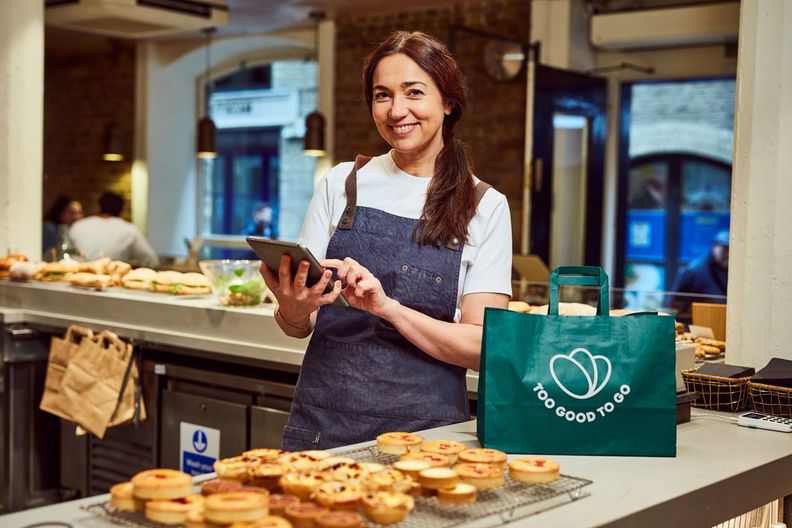
Every food business that prepares fresh product has to commit to inventory before it knows what will sell, which means the volume on the shelf at 10 a.m. reflects a forecast rather than a fact. Bakers set production the night before, grocery buyers order against a week of expected traffic, and quick service operators keep the case stocked through the final hour because an empty display sends customers somewhere else. The predictable outcome is a quantity of good food left at closing, and that food has already absorbed labor, packaging, and cost of goods by the time it goes unsold.
In the United States, surplus food carried a value of $381 billion in 2024, and $240 billion of that sat inside food industry sectors rather than in household kitchens. Those figures describe an operating reality rather than a series of mistakes, which is why the practical question for most operators is not how to eliminate surplus but how to recover value from it.
Too Good To Go is the world's largest marketplace for surplus food, connecting businesses that have unsold product at the end of service with local customers who want to buy it at a discount. Store teams pack what is left into a Surprise Bag and list it in the app with a pickup window that fits their own closing schedule. Customers reserve a bag before they arrive and collect it during that window, paying a fraction of retail for contents that vary with what the store has on hand that day.
The surprise element is what makes the model workable for operators, since a store can list a bag without committing to specific items in advance. Partners set their own bag price and pay a per-bag fee on each sale, keeping the balance as recovered revenue on inventory that would otherwise have been written off. The whole process sits inside the closing routine a team already runs, so the change is closer to a redirect than a new workflow.
What follows is a look at what three partners in different verticals have recovered, drawn from their own reported results, so operators weighing a partnership can see the shape of the outcome rather than a projection.
A New Jersey Pizza Shop Recovered $49,842 From Unsold Slices
Tony Boloney's three locations in New Jersey are built around bold flavors and a refusal to reheat day-old product, a standard that reliably left the team with surplus slices at close. Owner Mike Hauke had tried giving food away and donating leftovers, and while both had merit, neither scaled to the volume three busy shops produced every night.
After partnering with Too Good To Go, the shops rescued 14,281 meals that would otherwise have gone unsold and earned $49,842 in revenue from those Surprise Bags. Of 1,507 surveyed customers, 48% said they were visiting Tony Boloney's for the first time through the app, which reframed the program from a waste solution into a customer acquisition channel. A portion of those customers also bought something in addition to their bag at pickup, spending an average of $12.79 on top of the Surprise Bag price.
Setup took Hauke roughly two hours from signing up to going live, which mattered for a business with no appetite for a rollout that pulled managers off the floor.
"I just don't like the idea or thought of waste. It doesn't resonate well," Hauke said. "Too Good To Go helps us be responsible operators while preventing waste and getting new people through the door."
The staff response tracked with his, since employees who had spent shifts making product they later discarded now had a place for it to go.
A New York Bakery Turned End-of-Day Pastries Into $66,576
Bibble & Sip is a two-location bakery and café in New York City known for handmade pastries that blend Chinese-American and Asian flavor profiles with French technique. Product built to that standard has a short window, and the team faced the same closing-time question every bakery does, regardless of specialty or location.
Owner and pastry chef Gary Chan chose Too Good To Go because the mission lined up with a commitment the bakery already held, and because the mechanics fit a small staff without adding steps. The results across the partnership came to 18,134 meals saved and $66,576 in recovered revenue, with 73% of surveyed customers saying they would return.
"Being on Too Good To Go has helped us reach many new customers who end up coming back for more," Chan said. "It has been such a fun and positive way to connect with our community while helping reduce food waste."
A Grocery Store Replaced a $3,000 Monthly Disposal Cost With Revenue
Pemberton Farms carried a surplus disposal cost of nearly $3,000 every month, a figure driven by the operating model rather than by error. The store produces fresh food daily, maintains full shelves through the day, and positions inventory ahead of demand across a large footprint staffed by roughly 150 employees.
When Too Good To Go launched in the U.S., its team looked for a way to handle what remained at close without introducing friction during peak hours, since anything that slowed the front end during a rush was going to fail. The program was straightforward to implement and consistent to run, and it produced 12,280 meals sold and $47,659 recovered from inventory that would previously have been written off.
Grocery brings a second effect that shows up less in food service, which is basket expansion at pickup. Across surveyed grocery partners, 41% of Too Good To Go customers bought something else in addition to their bag, with an average add-on purchase of $18.41, and 37% were first-time customers at that store.
Grocery partners also reported an 87% repeat purchase intent and a 93.7% sell-through rate on listed bags.
What Recovery Looks Like Across Three Verticals
Each figure below is cumulative since that business joined, so the three cover different lengths of time.
Partner | Business | Meals Saved | Revenue Recovered | Would Return |
|---|---|---|---|---|
Tony Boloney's | Pizza and subs, three locations in New Jersey | 14,281 | $49,842 | 75% |
Bibble & Sip | Bakery and café, one location in New York City | 18,134 | $66,576 | 73% |
Pemberton Farms | Grocery, one store with roughly 150 employees | 12,280 | $47,659 | 87% |
The thread running through all three is that none of them changed how the business operated during the day. Surplus was already being dealt with at close, and the platform gave that step a destination that paid.
Recovery scales with the number of bags a location can reliably fill, which is a function of how much fresh product a business prepares rather than how many doors it operates. A single high-volume bakery can out-recover a multi-unit restaurant group for that reason.
What It Takes to Start Recovering Surplus
Three businesses in different categories started from different problems and landed in a similar place. The surplus was already sitting there at close, and someone was already making a decision about it. What changed was where that food went and what came back.
The size of the return tracks how many bags a location can fill on an ordinary day. There is no subscription and no upfront platform cost, which means the commitment is your team's time at closing rather than a line in next year's budget.
Across the U.S., partners have recouped more than $156 million from food that would otherwise have gone unsold, with 35.7 million meals rescued along the way.
Every closing shift between now and the day you sign up ends the same way, with good food written off and the revenue inside it gone. Too Good To Go changes what happens in that last half hour, and getting set up takes hours rather than quarters. See how Too Good To Go works for food businesses and find out what your locations could recover.
Frequently Asked Questions
What Is a Surprise Bag?
A Surprise Bag is a discounted bundle of unsold food that a store packs at the end of service. Customers reserve it through the Too Good To Go app and collect it during a pickup window the store sets, without knowing the exact contents in advance.
Who Decides What Goes In Each Surprise Bag?
The store team does. Staff fills each bag from whatever is left at close, which is why contents change from day to day and why the format works for surplus that varies.
Does Too Good To Go Cost Anything to Join?
There is no subscription and no upfront platform cost. Too Good To Go takes a fixed fee on each bag sold, so a partner only pays when a bag is bought.
Does This Require a POS or Inventory System Integration?
No integration is required to get started. Tools like the Surprise Bag Builder can connect with POS and inventory systems for partners who want surplus items flagged automatically, though a store can run the program without them.
Will Discounted Bags Cannibalize Full-Price Sales?
Partner data points the other way for most locations. Across grocery partners, 37% of Surprise Bag customers were visiting that store for the first time, and 41% bought something else at full price during pickup, spending an average of $18.41.
What Kinds of Businesses Can Partner With Too Good To Go?
Grocery stores, convenience stores, bakeries, cafés, and quick service restaurants all use the platform. Any business that prepares or stocks fresh food and holds unsold product at close is a candidate.
Can I See My Impact Data?
Partners have access to a live dashboard showing meals saved and the environmental impact behind them. Every Surprise Bag sold offsets 5.9 lbs of CO2e and keeps 30.1 sq ft of land and 214 gallons of water from being wasted.
Does This Replace Food Donation?
It works alongside it. Donation is a genuine good, and many partners continue donating while using Surprise Bags for the portion of surplus that donation programs cannot absorb on a daily schedule.
start saving food today
Our app is the world's largest marketplace for surplus food. We help users rescue good food from going to waste, offering great value for money at local stores, cafes and restaurants.
Too good to go blog
Too Good To Go BlogInside the Numbers: What Too Good To Go Partners Are Recovering
September 29, 2026
Every food business that prepares fresh product has to commit to inventory before it knows what will sell, which means the volume on the shelf at 10 a.m. ref...
Too Good To Go BlogPantry Organization Tips That Help You Waste Less Food
September 21, 2026
Most of the food that gets wasted at home was bought with good intentions. A bag of lentils slides behind a cereal box, a second jar of peanut butter joins t...

Win $250 app credits & more!Surprise Seconds Sweepstakes
September 17, 2026
Surprise Seconds Sweepstakes: Official Rules Details Page OFFICIAL RULES. NO PURCHASE NECESSARY TO ENTER OR WIN. A PURCHASE DOES NOT INCREASE THE CHANCES...
Too Good To Go BlogHow Convenience Store Trends Are Changing C-Store Operations
September 3, 2026
U.S. convenience stores rang up $341.2 billion in in-store sales in 2025, the 23rd straight year of inside-sales growth. That growth is no longer coming from...