Too Good To Go Blog
Grocery Store Promotions That Pay Off: Timing, Tactics, and Traffic
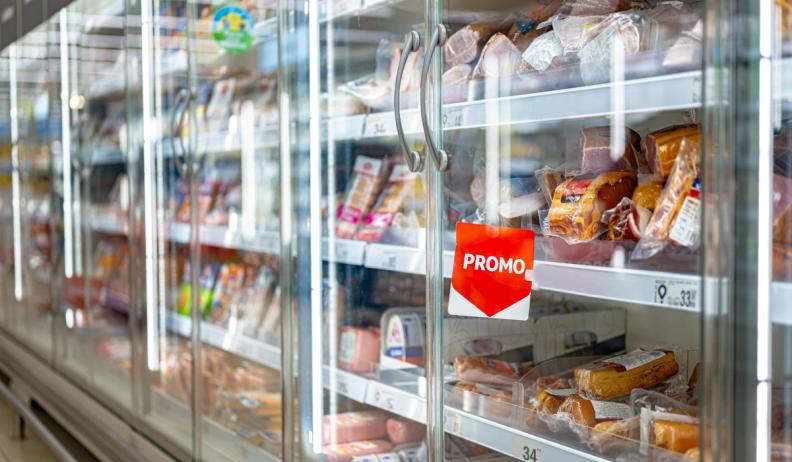
Grocery store promotions are one of the most common tools operators use to drive traffic and move inventory. However, they are also one of the easiest ways to lose money. Every grocery operator has run a promo that looked strong in their weekly ad, but produced disappointing results (inventory moved quickly, but margin did not improve). Moving volume is not the difficult part of grocery store promotions. The difficult part is still managing to turn a profit while that inventory flies off the shelves.
The promos that actually perform well share three core characteristics. First, timing is driven by how inventory flows through your store, not by a generic seasonal calendar. Second, pricing is built around a real profit target, not around what a competitor is advertising. Third, slow-moving product has a clear exit route before it becomes shrink. Strong execution on these principles, paired with the right performance indicators, sets your store up for profitable promos.
Why Grocery Store Promotions Often Fall Short
The most common failure is a discount that drops below an item's gross margin, which turns every unit sold into a small loss rather than a profit contribution.
Other failures are harder to spot but cause more damage over time. Cannibalization happens when a promoted item pulls sales from a comparable full-price product in the same category. The department looks active, but the category does not grow. Pantry loading happens when shoppers stock up at the promotional price and skip their next purchases, shifting sales forward rather than increasing them. Customer quality issues occur when the promotion attracts only deal-seekers who buy nothing else and disappear when the price resets.
Understanding why grocery store promotions fail is the first step, but it is not the same as understanding how to set them up for success.
The difference between a promo that erodes margin and one that builds it comes down to three controllable variables:
- when the promotion runs (timing),
- how much discount the operator gives away (pricing), and
- whether the store is actually measuring traffic and financial impact (measurement).
The sections below walk through each of these sink-or-swim variables and the tactics that protect margin while still driving volume and customer loyalty.
Tactic #1: Timing
Build the Promotional Calendar Backward From Peak Weeks
Most grocery store operators build their promotional calendar starting with an ad deadline and working forward, which leaves supply decisions to chance. A stronger approach is to identify your peak weeks first. These are the periods when demand is highest, and margin is most fragile. Once you know your peak weeks, work backward to lock in the supply, display, and pricing decisions that need to happen before those weeks arrive.
Lead times for supply, display setup, and pricing strategy all need to be locked in earlier than most operators realize, which is why timing the promotion correctly often matters more than pricing it aggressively.
Plan Around Supply Lead Times, Not Ad Deadlines
Promotional supply needs to be locked in well before the weekly ad is built, since wholesale and cooperative partners structure their programs around predictable lead times.
Early commitments give grocery store operators two key advantages. First, you have room to buy deeper on high-demand items. Second, you have enough time to build proper displays and signage around the offer. When you wait until the last minute, you lose both of those advantages and end up dropping a discount with no supporting merchandising.
Stores that wait too long usually end up promoting whatever is available at a reduced price, which rarely aligns with what the campaign was designed to accomplish.
Time Markdowns by Traffic Patterns
Most grocery stores see a noticeable difference in traffic between weekday and weekend shopping, so a flat seven-day offer at a single price does not account for that pattern.
Perishable departments feel the impact most directly. Bakery items and prepared foods have short sell-by windows, which means the timing of a markdown is not just a marketing decision. It is a margin decision. Get the timing right, and you recover value. Get it wrong, and you lose margin.
A store that understands its freshness windows by product type can schedule markdowns when recovery is still strong. This means marking down items well before they reach the end of their shelf life. When you time markdowns this way, you recover a meaningful portion of the original margin and keep product out of the grocery shrink column entirely.
Anchor Promotions to Seasonal Demand Shifts
Seasonal peaks create unique timing opportunities for grocery store promotions that go beyond price discounts. Community partnerships and local producer collaborations gain momentum during seasonal shifts when both shoppers and local suppliers are aligned around the same needs. Holiday entertaining, back-to-school prep, and harvest season are examples of these moments.
Local partnerships and sponsorships can take multiple forms. In-store sampling events during peak weeks work well. Co-branded bundles that pair regional specialty products with national brands also perform strongly. The key is timing these initiatives to coincide with when demand for those products naturally peaks.
Promotions grounded in seasonal community stories tend to draw shoppers who arrive for the experience and leave with a full basket. This produces a more durable form of foot traffic than a loss leader typically generates.
Tactic #2: Pricing
Discounts That Protect the Whole Category
Most operators approach promotional pricing by asking how deep a discount they need to attract shoppers. A stronger approach is to ask how much discount protects margin while still shifting purchase behavior. The difference is significant: a steep discount on a single item gets attention, but rarely produces enough volume to justify the margin loss.
A shallower discount spread across a group of related products tends to move more total units at a healthier blended margin, since shoppers respond to the overall value of the offer rather than one large price cut. Understanding how price sensitivity shapes shopper behavior helps operators distinguish between promotions that build lasting customer relationships and those that simply give away margin.
Use Threshold and Multi-Unit Pricing
Threshold pricing ties the discount to total basket value, not to any individual SKU. It connects the promotion to larger transactions by requiring shoppers to reach a spending target before the offer applies.
For example, a store that sets a $50 basket threshold for a 10% discount incentivizes customers to add items beyond what they came in for. This approach protects category margin while still delivering the customer savings they expected.
Multi-unit pricing works similarly for center-store items with longer shelf lives. Common examples include "buy three, get one half off" promotions. This approach works well for products with predictable consumption patterns, where customers are willing to stock up at a discount without triggering pantry loading concerns.
Limit Discounts to Identified Customers
Loyalty-gated pricing limits the discount to customers who have enrolled in a loyalty program or opted into a digital coupon, which protects margin on shoppers who would have paid full price while giving everyone else a reason to join the program.
This approach also lets operators target discounts based on purchase history, reaching households that have gone quiet or introducing products they have never purchased before.
Protecting grocery margins while applying loyalty-gated offers comes down to answering two questions. Who receives the discount? What does the store get in return? The answer might be a loyalty program signup, a larger basket, or a repeat visit.
Build Complete Meal Bundles Instead of Discounting Single Items
Shoppers during peak seasons are looking for solutions rather than just savings, and FMI research found that 59% of shoppers want the option to buy a combination of prepared foods at a set, discounted price, rather than assembling a meal item by item. Bundling changes how shoppers approach a promotion, since instead of comparing prices on individual products, they are deciding whether the whole bundle is worth it.
Pairing a higher-margin prepared item with a lower-margin center-store product keeps the blended margin in a range that still works financially, which makes bundling one of the strongest pricing tactics available to operators.
Use Loyalty Data to Target Offers Rather Than Broadcast Them
Most shoppers already have their phones out in the aisle. FMI's 2026 shopper research found that 54% of grocery shoppers use retailer apps while shopping in person. This creates a direct channel for personalized offers that does not depend on a printed circular.
Targeted promotions built on purchase history let a store discount selectively. An offer can reach a household that has gone quiet or introduce a product category that a customer has never purchased before. Building customer loyalty through relevant, well-timed offers costs significantly less than discounting broadly to reach the same result.
Tactic #3: Measurement
Sometimes operators skip measurement because it feels like extra work after a promotion ends. A stronger approach is to measure every promotion systematically, since this is what separates calendars that improve over time from those that just repeat the same mistakes.
Measure Against the Week It Replaced
Most operators judge a promotion's success by whether units moved, which is why weak promotions keep getting repeated.
A stronger approach is to measure every promotion against the specific week it replaced (not against zero), since this reveals whether a promotion actually generated incremental volume or simply shifted sales forward on the calendar.
A promotion that drives $10,000 in additional revenue but replaces $8,000 in baseline week traffic has produced only $2,000 in true lift, which is a very different outcome than the headline sales number suggests.
Track the Metrics That Reveal Real Profitability
Incremental lift compares promoted-period volume to a realistic baseline for that same week in a prior year. Adjust this baseline for any significant changes in store traffic or product availability to get an accurate number.
The sell-through percentage shows whether the promotional buy was sized correctly. This metric also prevents the common mistake of overbought inventory that ends up as shrink.
Average basket size on transactions that included the promoted item reveals whether the promotion attracted full-basket shoppers or deal-seekers who bought only the discounted item.
Return rate among customers who were acquired during the event separates one-time deal hunters from shoppers who developed a new habit. Track this metric over the following four to six weeks for accuracy.
Category performance during the promotion period reveals cannibalization that the item-level report hides. A promoted item can drive strong numbers while pulling share from related products at full price. This metric surfaces that trade-off.
Together, these five metrics give a complete picture of what a promotion actually delivered.
Include Shrink in the Same Review
A campaign that moves plenty of units but leaves excess inventory behind has not eliminated cost. It has shifted cost from the promotional line to the inventory shrinkage line, where it is easier to overlook.
Reviewing both the promotion's sales lift and the promotion period's shrink rate together gives an accurate picture of what the promotion cost the store in total. This analysis also surfaces revenue opportunities that sit well outside the weekly ad. Dedicated surplus channels, for example, can capture value from overbought inventory before it becomes waste.
The Reality: Surplus Happens
Even when timing, pricing, and measurement are all executed correctly, promotions still leave product on the shelf. No forecast accounts for every variable in a peak week, and some degree of overbought inventory is almost always part of the outcome. The question is not whether surplus will happen (it will), but what operators do with it once it does.
The Solution: Build a Dedicated Outlet for Surplus Inventory
Every promotional calendar produces leftovers. Overbought items, prepared foods made for traffic that arrived a day late, and produce near the end of its window all need a place to go once a campaign wraps up. Treating surplus as a dedicated channel rather than an emergency markdown gives operators a reliable way to recover value from inventory that did not sell through.
Reaching clearance-focused shoppers through a purpose-built channel also keeps steep discounts off the main sales floor. When discounts sit on the main sales floor, they undermine full-price merchandising and damage price perception.
Shoppers who seek out clearance and discounted grocery finds represent a distinct customer group that benefits from this approach. A dedicated surplus channel ensures that measurement of a promotion's true profitability includes the value recovered from leftover inventory. This recovered value is the final piece of the profitability puzzle.
Too Good To Go: Your Standing Surplus Channel
Too Good To Go operates the world's largest marketplace for surplus food, connecting stores with local shoppers who are looking for good food at a reduced price.
The signup process is simple: stores bundle eligible surplus items into Surprise Bags, set a pickup window that works with their daily schedule, and list them in the Too Good To Go app (which turns products that might have been written off into recovered revenue).
Many of those shoppers return for full-price trips once they discover the store, so surplus recovery works alongside a promotional calendar and gives every campaign a reliable outlet for inventory that does not sell through.
Sign up your grocery store with Too Good To Go and start selling your surplus food supply.
Frequently Asked Questions
What Makes a Grocery Store Promotion Profitable?
A profitable promotion brings in enough incremental margin to cover the cost of the discount, the labor behind the display, and any full-price sales that were lost to cannibalization in the same category. The size of the discount matters less than whether the offer generated additional shopping trips or larger baskets that would not have happened without it.
How Far In Advance Should Grocery Operators Plan Promos During Peak Seasons?
Locking in promotional supply eight to twelve weeks before peak weeks gives operators the best position, since early commitments make it possible to buy deeper on high-demand items and leave enough time to build the right merchandising around the offer, rather than reacting to whatever pricing is available late in the cycle.
What Are the Best Grocery Store Promotion Ideas for Peak Seasons?
Meal bundles, threshold offers tied to basket size, loyalty-targeted digital coupons, and campaigns anchored to local community partners tend to perform well during peak seasons, since each approach connects the discount to a larger purchase or an ongoing customer relationship, rather than a single low-priced item purchased by a shopper who may not return.
How Can a Store Promote Perishable Items Without Losing Margin?
Timing matters more than the size of the discount when it comes to perishables, since marking down an item while it still has usable shelf life recovers far more of its value than waiting until the final hours. Routing whatever remains into a dedicated surplus channel also helps prevent the kind of last-resort discounting that erodes margin across an entire department.
How Should Grocery Operators Measure a Promo’s Performance?
Incremental lift against a realistic baseline, sell-through rate, basket size on promoted transactions, and repeat visit rate among new customers together give a complete picture of what a promotion delivered. Shrink during the same period should be part of the review, because a promotion that leaves excess inventory behind has moved cost rather than eliminated it.
How Does Too Good To Go Fit Into an Overall Promotional Strategy?
Too Good To Go gives grocery stores a dedicated channel for the surplus inventory that a promotion did not sell through, since stores can package eligible items into Surprise Bags and sell them through the app during a set pickup window. Products that might have been written off as shrink generate revenue instead, and the customers who pick them up often return for regular shopping trips.
start saving food today
Our app is the world's largest marketplace for surplus food. We help users rescue good food from going to waste, offering great value for money at local stores, cafes and restaurants.
Too good to go blog
Too Good To Go BlogGrocery Store Promotions That Pay Off: Timing, Tactics, and Traffic
October 13, 2026
Grocery store promotions are one of the most common tools operators use to drive traffic and move inventory. However, they are also one of the easiest ways t...
Too Good To Go BlogInside the Numbers: What Too Good To Go Partners Are Recovering
September 29, 2026
Every food business that prepares fresh product has to commit to inventory before it knows what will sell, which means the volume on the shelf at 10 a.m. ref...

Too Good To Go BlogPantry Organization Tips That Help You Waste Less Food
September 21, 2026
Most of the food that gets wasted at home was bought with good intentions. A bag of lentils slides behind a cereal box, a second jar of peanut butter joins t...

Win $250 app credits & more!Surprise Seconds Sweepstakes
September 17, 2026
Surprise Seconds Sweepstakes: Official Rules Details Page OFFICIAL RULES. NO PURCHASE NECESSARY TO ENTER OR WIN. A PURCHASE DOES NOT INCREASE THE CHANCES...